When we talk about cyberbullying, most discussions center on its occurrence in school. This isn’t surprising given that modern school students are digital natives, which makes cyberbullying more frequent in schools than ever before. Yet, the phenomenon of cyberbullying doesn’t end after high school. Unfortunately, it’s also common in colleges.
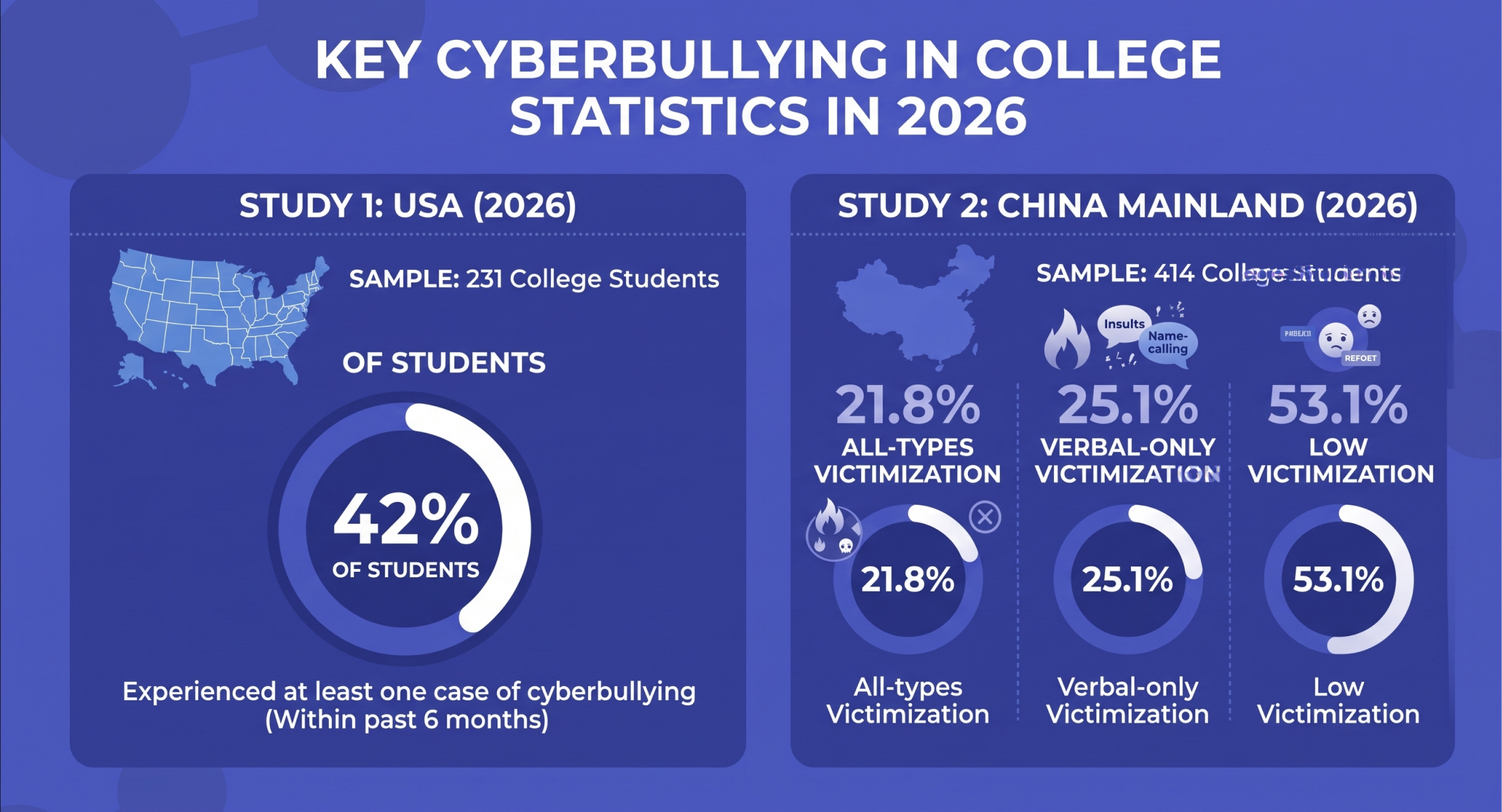
One of the latest studies with a sample of 231 students from two US universities reveals shocking numbers – 42% of surveyed students report experiencing cyberbullying victimization (in various forms) at least once in the past 6 months. In this article, we’ll look at cyberbullying statistics 2026 with a focus on college students to help you see the real scope of the problem.

What Is Cyberbullying in College?
Cyberbullying is intentional harm or harassment directed at a specific individual or group through the means of digital communication. The most common digital places where it can occur include:
- Social media (e.g., Instagram, TikTok, Snapchat, and others)
- Online chats and forums
- Messaging apps or text messaging
- Chats in gaming environments
- Email, etc.
Although the definition may sound a little broad, we can consider different types of aggressive and harmful behaviors to qualify as cyberbullying. According to StopBullying, a federal government website founded and managed by the US Department of Health and Human Services, the most common tactics include:
- Social targeting and rumor spreading
- Encouraging self-harm or suicide
- Impersonation and deception (catfishing)
- Privacy violations and exposure (doxing)
- Photo and video sharing and exploitation
- Harassment based on identity or status (e.g., hateful comments)
Key Cyberbullying in College Statistics in 2026
So cyberbullying isn’t absent in colleges. As we mentioned before, the 2026 US study found that 42% of students experienced at least one case of cyberbullying within the past 6 months. The initial sample for this study included 402 students, though the longitudinal follow-up only included 231 students. The findings from this study demonstrate a significant problem. It’s worth noting that the sample only included seniors, and 77.1% of respondents were female. For this reason, the authors of the study indicate that the findings cannot be considered representative of all American college students. Yet, other similar studies confirm that the issue exists.
Another 2026 study included a sample of 414 college students from China’s mainland. The study observed three types of cyberbullying and showed the following results:
- 21.8% of students experienced all-types victimization
- 25.1% experienced verbal-only victimization
- 53.1% experienced low victimization
While the presence of cyberbullying in college is confirmed through multiple studies, it’s hard to refer to a single percentage as a universal statistic. A narrative systematic review of 61 college-level papers relating to adverse cyberbehaviour found that these studies provide drastically different figures in terms of the prevalence of cyberbullying because of differences in sample sizes, definitions of cyberbullying, and measurement methods.
Why College Students Are Highly Exposed to Online Harassment
There are several reasons why statistics on cyberbullying in colleges are high these days. First and foremost, this happens because of intense internet use. According to the Pew Research Center, 63% of American adults between 18 and 29 years report using the internet almost constantly. Naturally, frequent internet usage makes young adults more likely to face cyberbullying at some point in their lives.
Another big reason is a high level of personal self-disclosure on the internet. Many young adults actively use social media to demonstrate their daily lives. They share personal photos, videos, and other sensitive details, which increases the likelihood of certain victimization patterns. Smart digital habits, such as keeping your profile personal and not sharing sensitive details, can reduce the risks.
Cyberbullying on Social Media Statistics
Among all digital spaces where cyberbullying can take place, social media unsurprisingly creates the most risks. Based on interviews with college students, the most cyberbullying instances take place on TikTok, Instagram, and Snapchat.
Each of these platforms provides aggressors with multiple means to victimize others. Much of the negative reactions and bullying happen in the comments section. Other types of bullying reported by students include:
- Reposts
- Duets
- Toxic communities
- Fake profiles
- Videos or photos posted without consent
It’s fair to say that these and other social media channels offer some mechanisms to fight cyberbullying. However, most of these mechanisms keep users accountable for detecting and reporting harassment themselves, which is why cyberbullying still remains a major issue on social media.
Which College Students Are More at Risk?
Unfortunately, given the frequent internet use and high levels of self-disclosure, no one is fully protected from cyberbullying today. Yet, some groups of students might be more likely to experience aggressive behaviors.
The first risk group is students with disabilities. According to a large 2025 study with a sample of 55,824 students, young people with disabilities are 1.87 times more likely to report cyberbullying than their peers. The same study revealed that female students and members of gender and sexual minorities also report cyberbullying more frequently.
Despite these findings, it’s not right to generalize to all students and universities. The same study says that students who self-reported a stronger sense of community and belonging had a lower likelihood of experiencing bullying. The situation can also change depending on the overall student population in a particular university. Furthermore, these data cannot be used to draw conclusions applicable to all countries because it uses a US sample solely.
How Does Cyberbullying Affect Students?
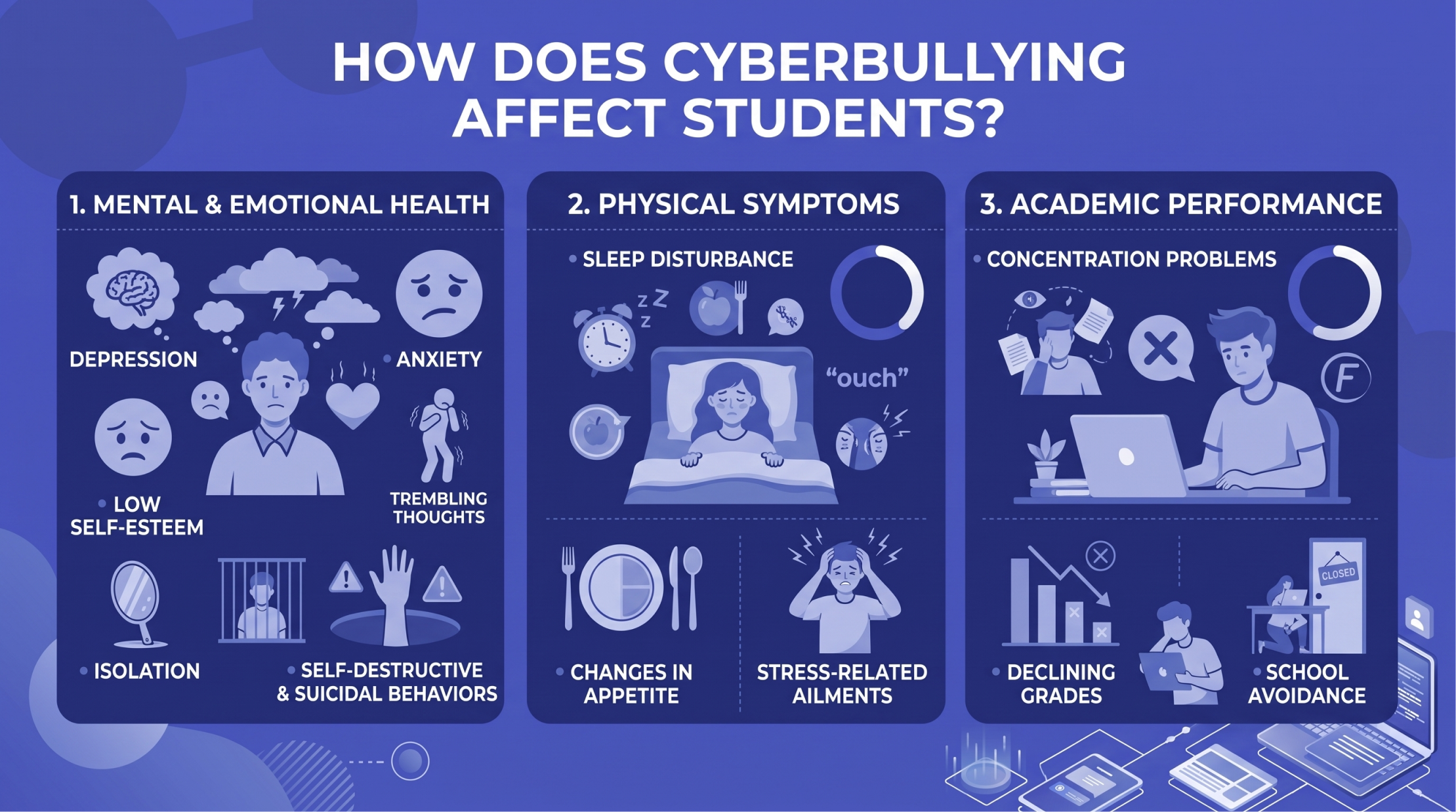
Cyberbullying, like any other form of harassment, can cause significant trauma. It often impacts students more severely than adults because their brains and emotional regulation skills are still developing. Besides, students may experience academic outcomes of trauma, along with physical and mental ones.
Mental and Emotional Health
Depression and anxiety are the most common effects of cyberbullying in students. Victims often report feeling intense hopelessness, sadness, and fear. Additionally, students who face bullying based on their appearance, weight, perceived intelligence, and other personal characteristics can gradually develop low self-esteem.
Feelings of shame and social withdrawal are also common among cyberbullying victims. Lastly, prolonged or severe harassment can increase risks of self-destructive and suicidal behaviors.
Physical Symptoms
Although bullying via digital channels doesn’t cause direct harm to a victim’s physical health, certain physical symptoms may appear, typically linked to the mental health impact of the trauma. In particular, students who experience bullying can deal with
- Sleep disturbance, nightmares, and insomnia caused by anxiety.
- A sudden loss of appetite or, on the contrary, binge eating triggered by stress.
- Other stress-related ailments, such as nausea, headaches, stomachaches, etc.
Academic Performance
A combination of emotional and physical symptoms described above can have a massive impact on a student’s academic performance. In particular, stress and a lack of sleep can lead to problems with concentrating in the classroom and at home. In the long run, this can result in declining grades. Additionally, students who experience cyberbullying may develop school avoidance. As a result, poor attendance can also lead to lower grades and even expulsion.
What Can Colleges Do About Cyberbullying?
While cyberbullying instances are not rare on college campuses, many universities still don’t have policies addressing this issue. Unlike middle and high schools that try to actively counteract cyberbullying, higher education facilities tend to prioritize adult responsibility and free speech, which might aggravate the problem.
A few things colleges can do to address cyberbullying are:
- Establishing clear and secure channels for reporting incidents.
- Providing student support and psychological services.
- Holding training on cyberbullying and digital safety.
- Increasing staff awareness.
- Building peer support programs.
On top of that, colleges and universities should focus on fostering a sense of inclusion and belonging in their communities. Together, these small steps can help tackle the problem of cyberbullying and increase students’ safety.
Conclusion
A growing body of evidence suggests that cyberbullying doesn’t exist only in middle and high schools. Studies from different years and countries confirm it’s not less common in colleges, too. Although it’s hard to draw an average of cyberbullying in college statistics because different studies provide different figures, one thing we can say for sure is that the problem is real, and it’s causing significant trauma for victims.
After reading this article, you should have a better understanding of cyberbullying in college, the main risk groups, possible consequences, and the potential solutions to the issue. Addressing the problem today is crucial for building a healthier and safer society tomorrow.