Stress has always been a major companion of a college student. An intersection of high academic and extracurricular expectations, financial limitations, transition to adulthood, and social anxiety around fitting in frequently creates a high level of daily stress in students. And the worst part is that they often don’t know how to handle it in a healthy way.
Without having strong positive coping mechanisms, many students end up developing negative tendencies to feel immediate comfort. In this article, we’ll explore the most common habits, reasons why they develop, the downsides of bad habits for students, and ways to replace them with healthy coping tactics.
Why College Stress Is So Common Among Students
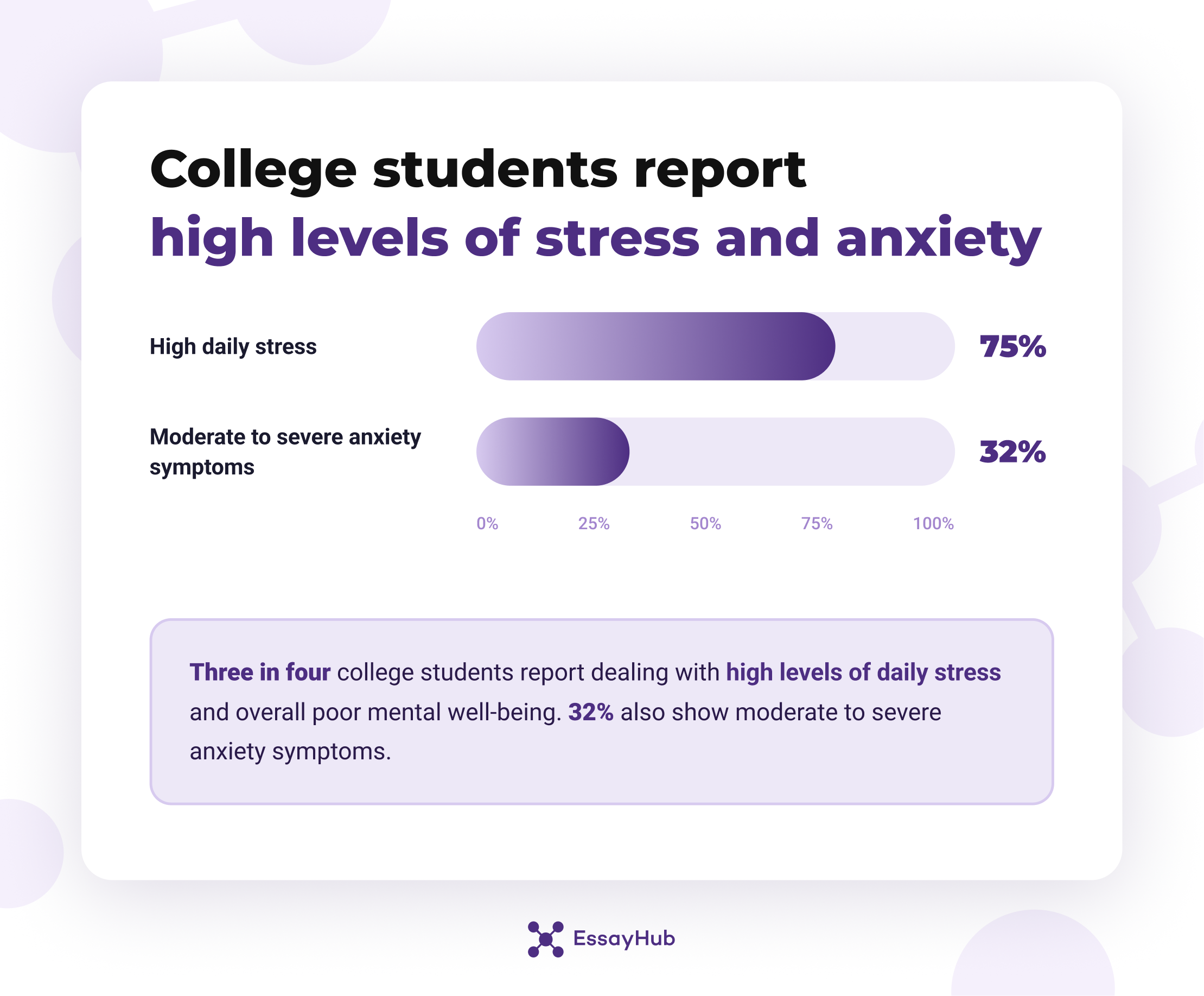
Three in four college students report dealing with high levels of daily stress and overall poor mental well-being. 32% also show moderate to severe anxiety symptoms. Although these figures are slightly decreasing compared to the first post-COVID years, they are still high enough to say that stress is a major issue in today’s colleges.
According to various studies, the main things contributing to high stress levels in college include:
- Significant academic workload
- Tight deadlines and a constant lack of time
- Grades
- Exams
- Financial struggles
- Part-time jobs
- Living away from home
- Social expectations and the desire to fit in
- Career uncertainty
- Constant digital connectivity
The effects of stress on college students include cognitive, emotional, and physical challenges. Seeking relief, many students turn to bad habits, such as substance use. And it further exacerbates the situation.
Top 10 Bad Habits for Students in 2026
Stress is a natural bodily reaction to a threat, change, or challenge. It can be both long-term and acute (short-term) and develop as a response to a variety of daily situations. Regardless of the type and duration, stress is associated with psychological symptoms, such as panic attacks, sadness, and irritability, as well as with physical symptoms like aches, exhaustion, and others. All this distress often causes people to change their behavioral patterns. And that's how stressed people develop negative habits.
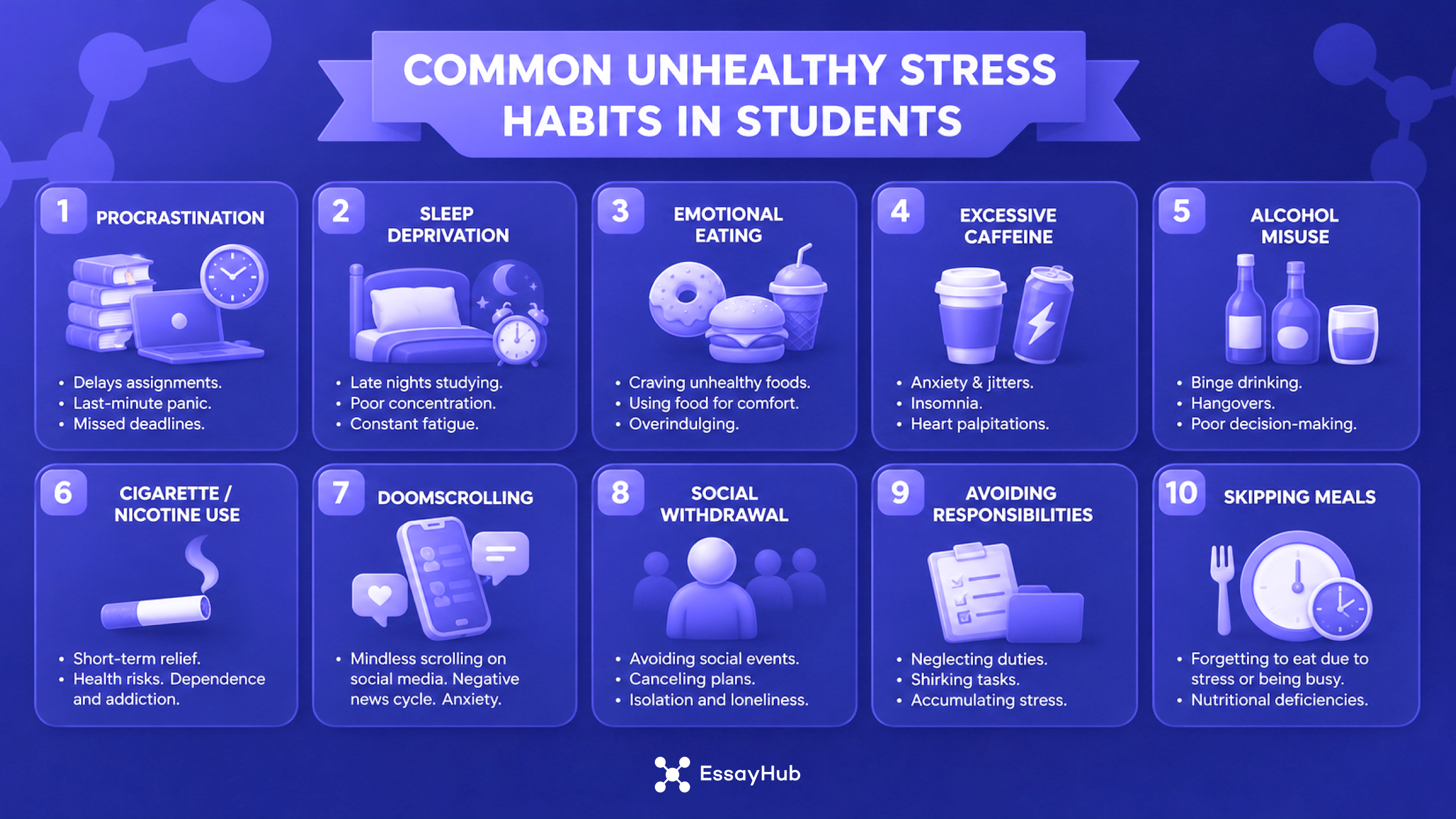
Unhealthy stress habits can vary significantly from one student to another. The most common bad habits examples for students in 2026 include:
- Procrastination
- Sleep deprivation
- Emotional eating
- Excessive caffeine consumption
- Alcohol misuse
- Cigarette or nicotine use
- Doomscrolling
- Social withdrawal
- Avoiding responsibilities
- Skipping meals
One thing all these habits have in common is that they provide emotional relief. However, it’s always temporary and results in higher stress levels over time.
Why Students Develop Unhealthy Stress Habits
As was mentioned earlier, the bad habits college students have often develop because every person experiencing stress wants to regain comfort. However, in reality, the mechanism of their development is deeper than that and consists of 3 interconnected factors.
The Brain Seeks Immediate Relief
Stress has a devastating effect on one’s brain. It creates an imbalance of neural circuitry, which affects not just mood but also cognition, focus, and decision-making.
When your brain remains in this state (think of it as a survival mode) for a long time, this creates severe mental fatigue. Eventually, the exhausted brain starts seeking remedies that can instantly reset the nervous system and reduce alertness. Needless to say, most “instant” remedies don’t have much to do with healthy coping. They only mask the problem instead of solving it.
Busy Schedules Leave Little Time for Healthy Coping
Unlike unhealthy coping tactics that often provide a quick solution, healthy coping mechanisms are more complicated. The majority of them require a well-organized routine and constant commitment because the effect of healthy coping is cumulative.
Unfortunately, the majority of college students don’t have much free time for building positive routines. Instead, they choose what works right now, such as staying up late to study for an exam instead of building a habit to study 30 minutes every day or skipping meals instead of making it a rule to pre-cook meals for the week ahead.
Poor Sleep Creates a Cycle of Stress
There is a very strong link between sleep and stress. On the one hand, high levels of stress can cause sleep issues. However, if you don’t do anything with this, poor sleep results in increased cortisol levels the next evening.
Additionally, a lack of sleep directly affects one’s focus and cognitive functions, which can cause poor performance in school and at work, and associated dissatisfaction with oneself. In short, fragmented and insufficient sleep creates a vicious cycle of stress that’s hard to get out of.
The Most Common Unhealthy Stress Habits Among College Students
Earlier, we told you about the 10 most common unhealthy habits students develop under stress. Each of them has a deeper hidden impact on young people’s cortisol levels, physical health, and other areas of life. In this block, we’ll look closer at some of the common habits and their impact.
Procrastination
Procrastination might be one of the fastest remedies college students use. When you feel stressed about studying, just set all the tasks aside, and you will instantly feel better. But that’s a temporary effect. Although procrastination reduces study-related anxiety in the moment, it also means that you will feel more pressured and stressed later, as your deadlines come closer.
Sacrificing Sleep
When students don’t procrastinate, they often decide to give up on sleep to study. While this can seem the only solution when deadlines are tight and there is no free time during the day, a lack of sleep eventually shifts your body into a pro-catabolic state. This means it breaks tissue down instead of building it. Respectively, it negatively affects your physical and mental recovery, leading to chronic fatigue, reduced cognition, and higher cortisol levels.
Emotional Eating
Stress causes 73% of students to snack, 42% to reduce food intake, and 38% to increase food intake. It may not feel like a big deal. However, food is the primary fuel for your body and brain. So even if you don’t feel bad after overeating, snacking, or skipping meals, each of these behaviors directly affects your health, academic performance, and mental well-being.
Excessive Caffeine and Energy Drinks
Systemic sleep deprivation and poor eating habits typically lead to chronic fatigue and low energy levels. To mitigate this effect, many students start relying on caffeine, and it seems to help. However, when coffee and energy drinks stop being tools for a temporary energy boost and become tools for masking underlying fatigue, they eventually make you plunge even deeper into energy deficit.
Doomscrolling and Excessive Social Media Use
Endlessly scrolling social media feeds and consuming negative or alarming content is a common avoidance pattern that seemingly helps you feel better by focusing on more distressing things than those going on in your own life. However, even though it can distract you from current problems, it typically leaves you more emotionally drained than before because doomscrolling still triggers the fight-or-flight response, meaning it adds stress instead of removing it.
Neglecting Exercise
Regular physical activity is one of the primary healthy habits known for balancing mental health and improving mood. Yet, it’s also one of the first habits students abandon because of a lack of time and energy. Eventually, a lack of exercise further exacerbates stress levels and their adverse effects.
How Unhealthy Habits Affect Academic Performance
Whether it’s snacking behavior, procrastination, or sleep deprivation, each negative stress-coping habit can have a devastating effect on your brain and physical health. When such behaviors become systematic, they can cause a lot of challenges that will impact your academic performance in the first place.
Here are some of the most common adverse effects found in students with unhealthy habits:
- Poor memory, concentration, and decision-making caused by mental fatigue and a lack of recovery and brain fueling.
- Impaired learning ability caused by weakened focus, cognitive function, and tiredness.
- Decreased productivity caused by constant procrastination and doomscrolling.
- A lack of motivation caused by poor performance and dissatisfaction with oneself.
- Burnout caused by constantly trying to push yourself to the limit, regardless of fatigue.
Each of these downsides can make it hard to study in college. So we can confidently say there is a direct link between unhealthy habits and poor academic performance.
Healthier Ways to Manage College Stress
Even though unhealthy coping techniques seem to work fast, they never bring a steady, long-term result. In order to keep stress levels low in the long run, it’s important to master healthy coping techniques.
In this part of our guide, we’ll tell you about the 5 most important good habits for students that help relieve stress.
Get Enough Sleep
Sufficient sleep means proper recovery, improved brain function, and higher energy levels. These are the essential pillars of quality living and productivity. Besides, proper sleep helps balance your hormonal levels and stabilize your mood.
What to do:
- Stop sacrificing sleep for studying
- Start going to bed earlier
- Develop calming pre-sleep routines
- Get 7 to 9 hours of sleep every night
Learn to Manage Your Time Efficiently
Although college students’ schedules are often packed, this isn’t the primary reason why you constantly lack time for studying, resting, and proper self-care. In most cases, a lack of time results from poor time management.
What to do:
- Use calendars, to-do lists, and timetables
- Build a fixed daily routine
- Learn to prioritize your tasks
- Use focus and productivity techniques like task chunking and the Pomodoro Technique
Exercise and Eat a Balanced Diet
Proper nutrition and regular physical activity are the essential elements of a healthy mind and body. Their combination helps support hormonal balance, energy levels, and mental clarity. So neglecting them isn’t an option, even with a busy schedule.
What to do:
- Engage in daily, low-impact activities (e.g., walking)
- Drink plenty of water
- Minimize the amount of caffeine and alcohol
- Build your diet with a focus on lean proteins, whole grains, fruits, and vegetables
Use Mindfulness and Well-being Techniques
When stress levels rise, you can replace habitual unhealthy remedies with healthy techniques that also bring fast relief and a cumulative effect.
What to do:
- For instant relief, try the 5-4-3-2-1 method or box breathing
- For long-term effect, practice meditation, journaling, and yoga
- Find daily activities that bring joy and reduce anxiety (e.g., listening to music, reading, walking, etc.)
Talk to someone
When you are in chronic stress, social withdrawal only tends to worsen stress and anxiety by giving you a sense of loneliness. Building a social support system, on the other hand, brings a sense of belonging and lets you share your worries, fears, and other emotions to feel better.
What to do:
- Talk to friends and family
- Communicate with a professor or counselor
- Attend support groups in your area
- Schedule sessions with a psychologist
Conclusion
The majority of college students experience moderate to high levels of daily stress. Academic load, time pressure, and other challenges often make young people seek fast and effective coping methods. But, unfortunately, they often are unhealthy.
As you now know, developing unhealthy habits in response to stress only seems to help, bringing you temporary relief and worsening the situation later. So in order to feel good and perform great in college, you need to develop positive coping habits instead.