
A letter of continued interest example follows a simple, formal structure. It is usually one page, addressed to the admissions office, and opens by clearly stating continued interest and current application status. The main section highlights relevant updates, such as improved grades or new responsibilities, and briefly connects them to the program. A strong example ends by restating the intent to enroll if admitted and closing professionally.
Well-written examples of letter of continued interest stay concise, avoid repetition, and use clear formatting so the letter is easy to review. Many students prefer reviewing a PDF sample to understand the proper length and layout. For additional help, EssayHub offers support for refining structure and tone, including services like ‘write my essay’ to keep all application materials consistent.
Letter of Continued Interest Examples for Different Institution Types
Below are examples in PDF format written for different institution types. Each example shows how the purpose, tone, and content of the letter should shift depending on the admissions context, while still following the same core principles of clarity, relevance, and restraint.
For a detailed guide on how to write letter of continued interest, be sure to check out our dedicated article.
Example #1 for College Waitlist
Before writing a waitlist letter, take a moment to ground it on purpose. This is your opportunity to confirm that the specific school still matters to you, share a few meaningful updates since you applied, and state your intent to enroll if offered a spot.

Example #2 for Medical School Waitlist
The following formal letter is written for applicants placed on a medical school waitlist who want to reaffirm their interest and share meaningful updates. It focuses on reflection, continued academic performance, and clinical engagement in a professional tone.
Example #3 for Law School Waitlist
Before submitting the letter, clarify its purpose. A law school waitlist letter should briefly reaffirm your interest, reflect on how your academic success has continued since applying, and state your intent to enroll if admitted, all in a tone that feels thoughtful and sincere rather than rehearsed.
Example #4 for Graduate School Waitlist
Before sending a graduate school waitlist letter, it helps to stay focused on intent. The goal is to reaffirm interest, share meaningful academic updates since applying, and clearly state your willingness to enroll if admitted, all in a thoughtful, measured tone.
Example #5 for Fellowship Program Waitlist
This letter is a chance to reconnect with the admissions department. It should briefly restate your interest in the fellowship, reflect on how your work has progressed since applying, and explain why the program remains the right next step, all in a thoughtful and straightforward tone.
Read our blog on how to write a precis to summarize complex ideas with clarity.


Letter of Continued Interest Examples for Different Situations
Below are sample letters of continued interest written for different situations. These samples show how to adjust tone and focus depending on whether you were deferred, waitlisted, invited to submit updates, or have new academic information to share.
Example #1: Waitlist
When writing a letter after being waitlisted, confirm that the school remains a top choice, share any meaningful updates since applying, and state clearly that you would accept an offer if admitted. Keep the letter concise, professional, and free of pressure or repetition.
Example #2: Deferred Application
When writing after a deferral, keep the letter grounded and simple. Reconfirm that your dream school is still a top choice, share any concrete updates since applying, and state clearly that you would enroll if admitted. A steady, professional tone matters more than emotion or repetition.
Example #3: Demonstrated Interest Considered
This type of letter should briefly confirm that the school remains a strong choice, point to concrete ways you have stayed engaged since applying, and connect that engagement to your academic goals. The focus should stay on actions and fit, not enthusiasm alone.
Example #4: Updates Encouraged
When admissions officers ask for updates, treat the letter as a chance to report what has actually changed. Highlight real academic progress or new responsibilities that add weight to your application, briefly reaffirm your interest, and state plainly that you would enroll if admitted.
Example #5: Academic Updates
When new grades or academic results strengthen your application, use the letter to present them clearly. Share what changed, note why it matters, and reaffirm that the school remains a top choice. The message works best when it stays concise, factual, and centered on academic progress.
To see how strategic questions can strengthen written arguments, read our article featuring rhetorical question examples.
Common Mistakes Students Make in a Letter of Continued Interest
Below, you will find the most common mistakes made by students when writing a letter of continued interest:
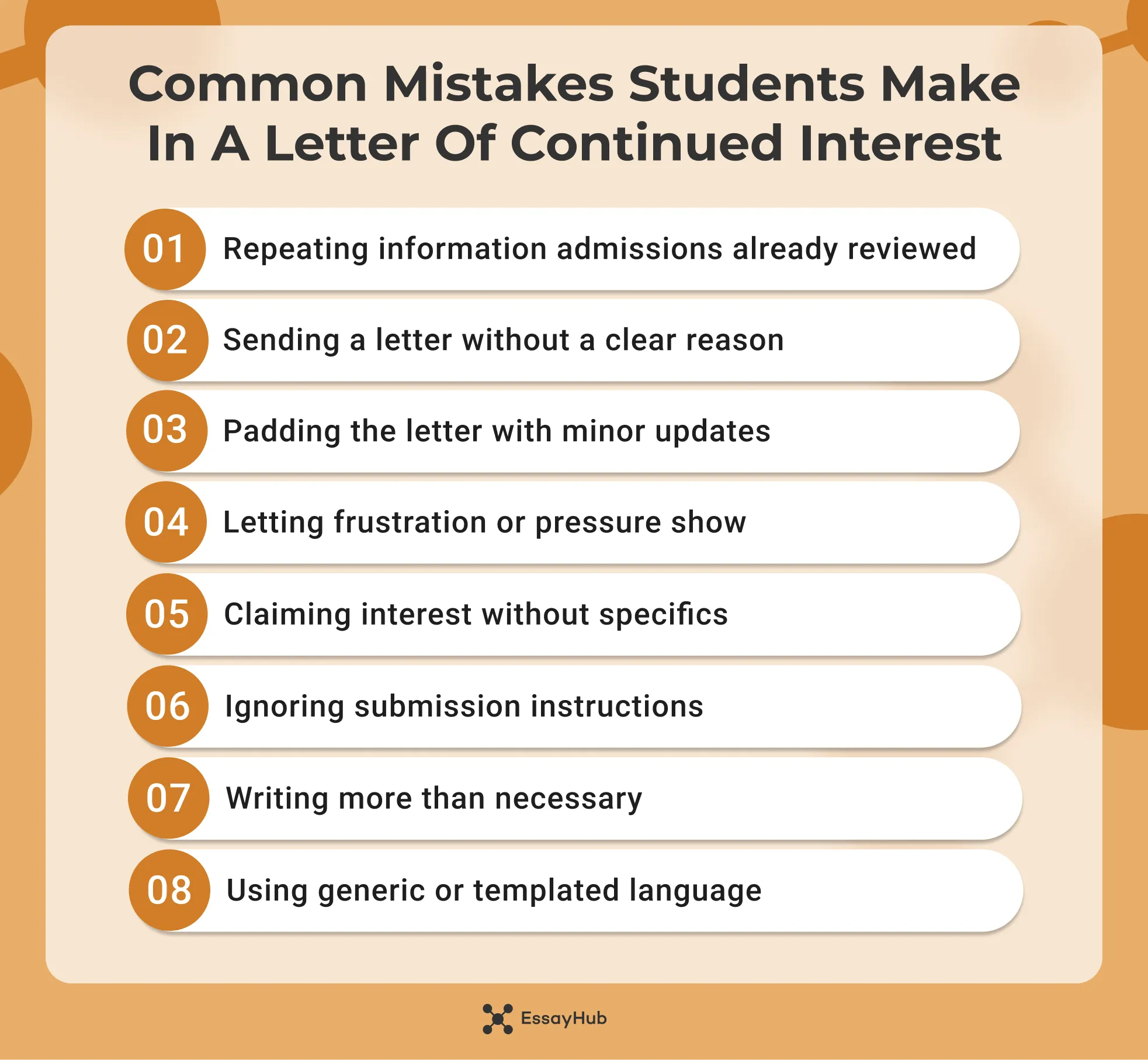
- Repeating what the admissions committee has already read: Rehashing essays, activities, or awards adds nothing and suggests you misunderstand the purpose of the letter.
- Sending a letter without a clear purpose: When it is unclear why the letter exists or what has changed, the message becomes easy to skim past.
- Filling space with minor updates: Small or cosmetic updates weaken stronger ones and make the letter feel padded rather than intentional.
- Letting frustration show through: Even subtle emotional signals read as impatience or pressure, which rarely helps an application.
- Claiming interest without specifics: General enthusiasm without a clear fit or intent makes commitment difficult to judge.
- Ignoring submission instructions: Sending materials a school does not accept, or submitting them incorrectly, signals carelessness.
- Writing more than necessary: Length often reflects poor prioritization rather than seriousness.
- Using generic or templated language: Polished but impersonal writing blends into dozens of similar letters and is quickly forgotten.
Students working on longer academic projects can also use EssayHub’s thesis writer service to maintain clarity across major submissions.
Wrapping It Up
A strong letter of continued interest succeeds because it is intentional. It stays focused on what has changed, why the school still fits, and how seriously you are prepared to enroll. When the letter is concise, specific, and professionally written, it reinforces your application rather than repeating it.
For students who want help shaping that message or refining the language, EssayHub offers support that keeps the tone clear and credible. Our assistance can be useful when polishing a continued interest letter or handling other academic tasks through services like ‘buy an essay’, especially when consistency and quality matter across submissions.
FAQs
What Defines a Strong Letter of Continued Interest Example?
How Long Should a Letter of Continued Interest Example Be?
Can a Letter of Continued Interest Influence an Admissions Decision?

Ryan Acton is an essay-writing expert with a Ph.D. in Sociology, specializing in sociological research and historical analysis. By partnering with EssayHub, he provides comprehensive support to students, helping them craft well-informed essays across a variety of topics.