Key Takeaways
- Gen Z faces high burnout rates, low motivation, and rising stress levels that directly affect workplace performance.
- Mental health, financial strain, and unclear communication systems create major barriers to productivity for young workers.
- Gen Z expects flexibility, modern tools, steady feedback, and workplaces that support well-being as a standard, not a bonus.
- Employers who ignore these needs risk turnover spikes, skill shortages, weaker engagement, and long-term productivity loss.
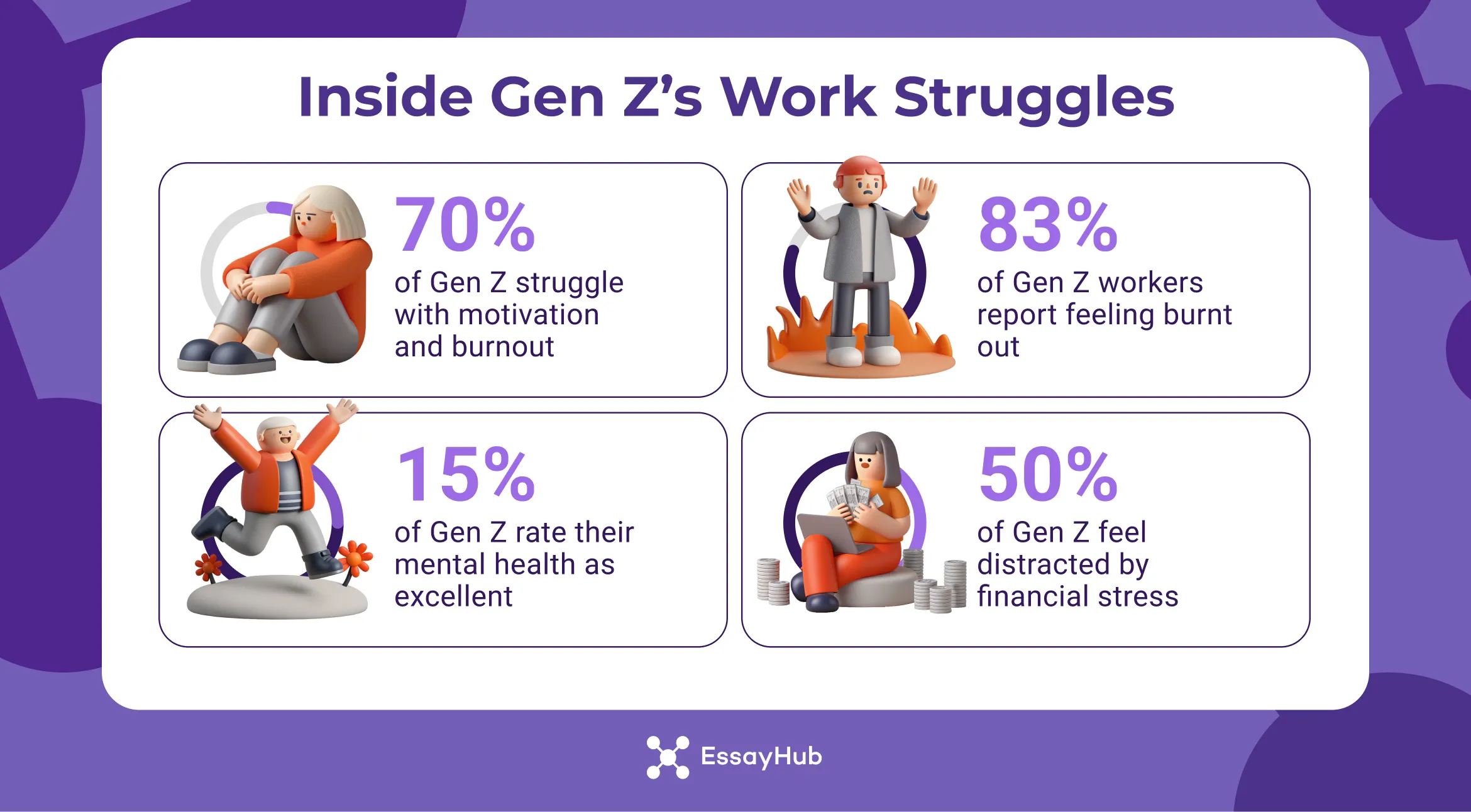
Surveys show that almost 70% of Gen Z struggle with motivation and burnout because they face constant pressure, fast work environments, and limited recovery time. They practically begin their workdays already tired due to stress from workload, financial strain, and unclear expectations. Low mental energy makes simple tasks harder, slows progress, and leads to fatigue that carries through the entire week.
If your studies and your job overwhelm you, there's no shame in asking for help. Reach out to one of EssayHub's professional writers who can take over some of your tasks so you can take a break.
Gen Z Workplace Burnout Data
Gen Z workplace burnout is evident in global research, and its scale stands out. Studies that tracked young employees after the pandemic reported burnout levels near 80%. Similar findings surfaced in BBC coverage, which described widespread exhaustion among workers in their early careers.
A separate survey that spanned 11 countries found burnout rates around 83% for Gen Z, while older groups reported numbers closer to 75%. Wellbeing researchers noticed another signal: almost a quarter of adults aged 18 to 24 described their stress as unmanageable, and nearly every respondent in that age band reported at least one burnout symptom. Canadian data added even more layers, with 51% of Gen Z respondents reporting burnout, a number that sat between millennial and Gen X rates but far above the lower burnout levels among boomers.
Taken together, these findings show a generation that enters the workforce with high ambition and unusually high strain. Workplace burnout is no longer an edge case for Gen Z, but rather a core pattern that leaders must take seriously.
Mental Health as a Primary Barrier to the Productivity of Gen Z
Stress reduces productivity in measurable ways. Anxiety disrupts attention, and mental fatigue makes it harder to think through tasks. Many young employees report days when they cannot focus because stress remains constant. Multiple studies show a strong association between mental health and daily output. A 2021 survey found that 76% of employees reported symptoms of depression or anxiety, and the data showed a clear decline in productivity during those periods.
Gen Z reports the lowest levels of positive mental health. Research from Gallup and the Walton Family Foundation showed that only 15% of people aged 18 to 26 rated their mental health as excellent. The percentage was reported as higher in earlier surveys conducted roughly a decade ago. The decline reflects the academic pressure and instability this group experienced while growing up.
Gen Z workplace challenges align with these findings. Many undergraduates already expect burnout early in their careers. More than 80% worry about future burnout, and almost 30% of women describe themselves as highly worried. Here’s what 9 out of 10 Gen Z employees value most when it comes to job opportunities:
- Work-life balance: viewed as essential for long-term stability.
- Mental health support: expected as a standard part of workplace culture.
- Overall well-being: considered a core factor when deciding where to work.
Young workers extend these expectations to employers. More than a third believe mental health coverage is essential. Job descriptions refer to mental health support more often than before, and students pay close attention to these details. Many review employer feedback, internal culture information, and employee experiences before applying.
EssayHub's history essay writing service can help you keep up with the deadlines when the workload gets too heavy.
Financial Pressure and Job Insecurity Among Gen Z
Financial stress interferes with productivity in an almost physical way. Thoughts scatter, and even small decisions take more effort than they should. Some young workers skip entire workdays because worry becomes too overwhelming to ignore. The reasons for this are straightforward: research shows nearly half of Gen Z employees feel distracted by financial pressure, and 19% live in a state of constant worry. 11% reported missing work because money stress overwhelmed them.
Rising living costs continue to grow faster than early-career wages. Only 45% of Gen Z employees feel fairly compensated. Only 32% report having more than £1,000 in emergency savings (UK-based data). More than half consider taking a second job or side hustle, and almost one in five already works one.
Gen Z names specific forms of support:
- Discounts: help lower daily costs and ease immediate financial pressure.
- Vouchers: provide practical, usable assistance without complicating pay structures.
- Cashback programs: return a portion of spending and create more room in tight budgets.
- Performance bonuses: offer direct rewards for strong output and clear effort.
- Employer savings contributions: build a financial cushion that many young workers lack.
- Financial education tools: give structure to budgeting and long-term planning.
Workplace attendance expectations create another source of pressure. A quarter of Gen Z workers feel pushed to come into the office even when the requirement adds no clear benefit. Many feel overlooked when they do. Employers have tested different incentives, yet many of those options do not match what young workers find useful. Gen Z consistently prefers free meals, bonuses, additional days off, flexible schedules, and commuting support.
Gen Z Workplace Expectations vs. Traditional Workplace Values
Gen Z walks into the workplace with a different set of expectations than many older systems were built for. This generation pays close attention to mental health, work-life balance, and how a job fits into daily life. Traditional structures rely on strict schedules and fixed paths, and that creates tension when young employees want more flexibility. Technology adds another layer to the gap. Gen Z prefers efficient digital tools that keep work moving. Slow platforms interrupt their focus and drain motivation. Many also switch roles more often because they want new skills and broader experience.
Communication shapes a large part of this shift. Gen Z prefers direct messages and regular check-ins. Long review cycles feel disconnected. Current Gen Z work ethic patterns show a need for steady interaction and openness in day-to-day communication.
On a similar note, check out our article on Gen Z social media usage statistics to see how the habit shapes the everyday life of young people.


Why Employers Need to Adapt Fast
Workplaces face long-term risk when they ignore the needs of younger employees. Productivity drops when burnout stays unaddressed, and many teams feel that pressure each week. High turnover creates new costs and interruptions that affect every department. Reports describe growing problems with Gen Z in the workplace, yet most issues come from unclear systems and limited support.
Many organizations lose talented applicants because expectations feel outdated. Job searches become wider as young workers look for structure, stability, and basic mental health awareness. Talent shortages expand as more workers reconsider long commitments. Experts warn that companies that delay adjustments will struggle with retention, planning, and internal communication. Early action creates steady performance and stronger results for the entire workforce.
How Employers Can Improve Gen Z Productivity
Workplaces that support Gen Z with a clear structure see stronger results. Young employees work best when expectations feel reasonable, and feedback arrives on time. Managers help productivity when they identify stress points early and adjust workloads before burnout develops. Several practical steps show consistent impact:
- Mental health support through accessible benefits and informed leadership.
- Flexibility through remote options, schedule adjustments, and task autonomy.
- Improved management practices through regular check-ins and clear direction.
- Realistic workload design that prevents overload and protects focus.
These steps help Gen Z maintain stable performance across the week. Many employers report better retention once these systems take hold. Productivity rises as employees gain confidence in the structure around them.
Long-Term Consequences of Not Responding to Gen Z Needs
Workplaces that overlook Gen Z signals eventually face operational issues that spread through entire teams. The impact appears slowly, then settles into daily routines where every task feels harder than it should. Many companies underestimate how quickly these patterns grow until productivity, communication, and planning all begin to shift in the wrong direction. Potential consequences might include:
- Turnover spikes: young employees leave at higher rates, and constant rehiring consumes time and resources.
- Lower output: burnout reduces focus and leaves teams without steady momentum.
- Talent gaps: strong applicants move toward employers who offer updated systems and clearer expectations.
- Weak communication: unclear direction slows decisions across departments.
- Reduced engagement: employees stop volunteering ideas or taking initiative.
- Skill shortages: long-term planning becomes difficult as gaps widen.
Final Thoughts
Gen Z steps into the workplace with needs that are clear once employers look closely at the data. Burnout, financial strain, and constant pressure shape how they work, and those conditions influence performance far more than many leaders expect. Some teams adjust early and see the difference almost immediately. Others wait and discover that disengagement becomes harder to reverse once it settles into daily routines. Simple systems, steady communication, and predictable support create the stability younger workers search for. Productivity rises when the environment respects these limits and gives people room to focus.
Stress among students is no less damaging to mental health than that of employees. In those stressful moments, consistent help is what they most often need. If you're facing heavy workloads and tight deadlines, search for 'someone to write my essay' in our expert team.
FAQs
What Do Companies Misunderstand About Gen Z at Work?
What Challenges Affect Gen Z in the Workplace?
Are Gen Z Workers Less Productive Than Older Generations?
How Does Mental Health Affect Gen Z at Work?
Why Is Gen Z Productivity Declining in the Workplace?

Samuel Gorbold, a seasoned professor with over 30 years of experience, guides students across disciplines such as English, psychology, political science, and many more. Together with EssayHub, he is dedicated to enhancing student understanding and success through comprehensive academic support.
- Voices of Gen Z: Perspectives on U.S. Education, Well-Being and the Future. (2023, September 14). Walton Family Foundation. https://www.waltonfamilyfoundation.org/learning/voices-of-gen-z-perspectives-on-u-s-education-well-being-and-the-future
- Helou, D. E. (2025, October). How to Beat Gen Z Workplace Burnout - CB. Canadian Business – How to Do Business Better. https://canadianbusiness.com/ideas/gen-z-burnout/
- Purdue University. (2023). Generational Differences in the Workplace. Purdue Global. https://www.purdueglobal.edu/education-partnerships/generational-workforce-differences-infographic/